SPARKLES

Responsible upscaling of floating solar
De-carbonization of the energy supply sector is a key priority to meet the goals of the Dutch Climate Act. Solar power is generally considered a desirable alternative to fossil fuels, but the installation of these photovoltaic systems (PV) requires considerable space. To achieve the ambitions of the Dutch Government, large-scale deployment of PV is needed- including placement on inland waters, through Floating Photovoltaics (FPV). However, the environmental impacts of FPV is not well understood, and policy and legislation concerning their implementation are not yet in place.
SPARKLES aims to develop sustainable, nature-inclusive solutions for FPV. Specifically, SPARKLES addresses the disconnect of the domains of energy science, ecology and governance that currently hampers responsible upscaling of FPV. By creating interdisciplinary frameworks and fostering collaboration with stakeholders, SPARKLES seeks to balance energy needs with ecological and social benefits across local, regional, and national scales.
Funded by NWO.
Latest news
-
Is there room for floating solar in the Netherlands?
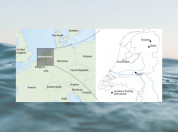
SPARKLES PhD candidate Annanta Kaul presented her national-scale analysis of which Dutch inland water bodies are suitable for floating PV at EU PVSEC 2026 in Rotterdam. Her work screens for environmental protection and competing uses, and tests grid feasibility in two case studies.
-
Balancing Renewable Energy and Environmental Protection
SPARKLES PhD researcher Tamar van de Gronden presented her research at the European Environmental Law Forum (EELF) Conference 2026 in Copenhagen. Her work explores how Europe can accelerate renewable energy deployment while safeguarding environmental protection, with a particular focus on floating photovoltaics on inland waters.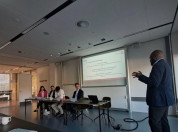
-
Why some floating solar parks win communities over (and others don't)
Community acceptance is one of the biggest barriers to floating solar, yet remains poorly understood. A new SPARKLES study by Henriëtte Tulp and Carel Dieperink compares three Dutch floating solar parks to show that support hinges not on the technology itself, but on early engagement, trust, and whether local benefits truly stay local.