Educational Toolbox

Educational Toolbox
Other Experts:
SPARKLES has developed an educational toolbox to support learners, teachers and professionals in the approach to how FPV interacts with aquatic ecosystems; how design choices influence environmental impact; and how governance, policy and local perspectives shape responsible deployment.
Our goal is to ensure that if floating solar becomes a major part of the Dutch energy landscape, it does so in a way that benefits both people and nature, not one at the expense of the other.
Learning Goals
Students will learn to:
- Understand FPV technology and its unique challenges and opportunities.
- Evaluate hydrodynamic behaviour of FPV systems: waves, currents, wind loads, anchoring, maintenance.
- Identify environmental and ecological processes affected by FPV, conceptually and through available models.
- Analyze environmental, social, and economic trade-offs, including site selection and coverage.
- Conduct stakeholder engagement exercises to negotiate trade-offs and develop solutions.
- Understand safety, risk, and acceptance test procedures across FPV project phases.
- Work with modelling or simulation tools to quantify hydrodynamic or ecological impacts.
Floating Photovoltaics (FPV): Why it matters
What is FPV?
Floating Photovoltaics (FPV) are solar power systems installed on water bodies, such as reservoirs, lakes, and ponds. They are an innovative solution to renewable energy challenges, combining solar power generation with efficient use of space.
Why is FPV growing?
Rapid declines in solar costs, combined with increasing scarcity of land near major demand centers, have accelerated interest in floating solar as an alternative deployment option. FPV also benefits from strong synergies with reservoirs and irrigation systems, where available water surfaces can host solar arrays without competing for land. At the same time, floating solar offers attractive co‑benefits for energy security and climate mitigation, making it an appealing solution for regions seeking low‑carbon, space‑efficient power generation.
Class discussion:
For this activity, start by watching the introductory FPV video together. After viewing, form small teams and each group will work with one “first‑impression lens”: what FPV is, why FPV is growing, what might be challenging, or what we still don’t know. Using your assigned lens, list three to five observations from the video. Then rotate to another team’s sheet and add questions only, such as how stable FPV is during storms or how anchoring works in deep water.
Pros and Cons of FPV systems
Floating solar brings clear advantages but also important constraints we should keep in mind. Its main benefits include:
- reducing land use
- improving panel performance through a cooling effect, and
- creating synergies with existing water reservoirs, such as lowering evaporation or pairing with hydropower.
- At the same time, FPV systems must be designed to withstand storms and high mooring loads, and their ecological effects remain partly uncertain, especially regarding light penetration, water temperature, and aquatic habitats.
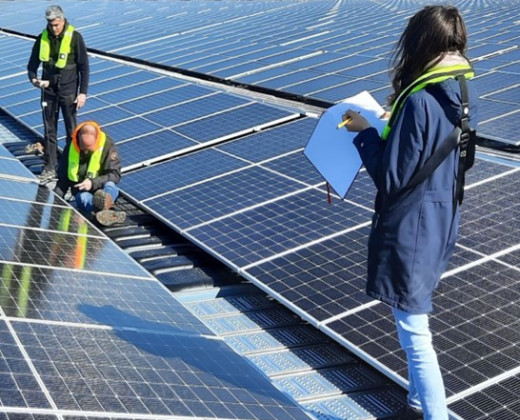
Visit the readings below to get more insights into the benefits and challenges of FPV systems.
›› Where Sun Meets Water: Floating Solar Handbook for Practitioners (World Bank) — a comprehensive introduction to FPV technology, site selection, and environmental considerations. Chapter 2
›› Floating PV Best Practice (HELAPCO). Read Chapters 5 and 6
Site identification
Site identification is one of the most important early steps in planning a floating solar project. During this process you will consider all aspects, including social, environmental, economic and legislative considerations.
Class activity:
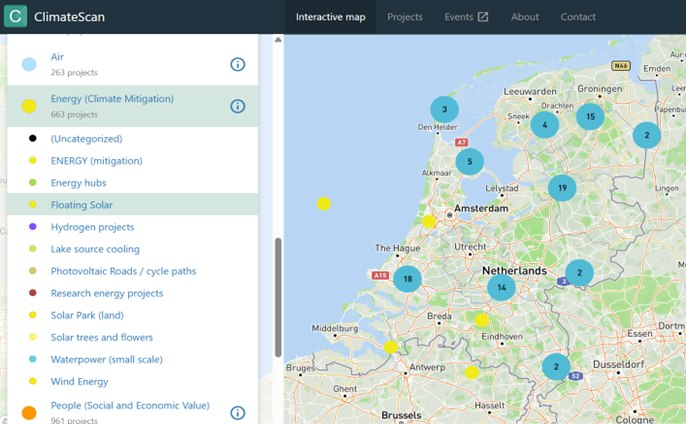
Go to ClimateScan.org and search for floating solar projects using terms like floating solar, floating PV, or FPV. Select three FPV locations from different regions. For each site, note the location, type of water body, project size and one interesting design or environmental detail. After collecting your examples, compare them in small groups and discuss patterns you notice. E.g. do you see an area that contain more FPV than others? What types of water bodies are used? Or what information is missing?
TIP: You can add your own floating solar park on ClimateScan!!!
Reflection
Reflect on the two case studies described under 5.3 of ‘Where Sun Meets Water’ and consider whether they are good models for other cities? Write a short reflection (200–300 words) evaluating whether these FPV projects could be replicated elsewhere. Consider land availability, water body type, governance capacity, environmental conditions, and energy needs.
Hydrodynamic Behaviour of FPV Systems
[Work in progress]
Focus of the course is on hydrodynamic aspects, not energy.
Energy Yield Analysis
[Work in progress]
Environmental impact of FPV
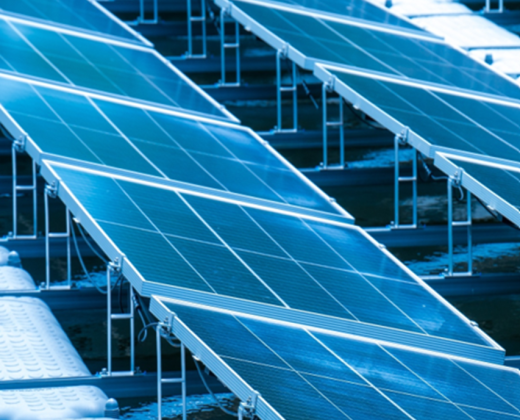
Floating solar parks can offer clean energy, but they also interact with the water bodies they cover. By shading the surface, they can influence temperature, light penetration, and oxygen levels, which in turn affect aquatic ecosystems. Understanding these impacts helps ensure floating solar is developed responsibly and sustainably.
Class discussion question
After watching the video, what do you think are the biggest environmental and social considerations when installing floating solar parks on lakes or reservoirs? Reflect on how the technology benefits energy production, but also how it might affect water quality, ecosystems, recreation, or local communities.
Environmental impact assessment
An Environmental Impact Assessment is carried out before the development of a floating solar park to make sure there are no adverse impacts and to ensure that floating solar parks are designed and located in ways that protect water quality, ecology, and landscape values while balancing renewable‑energy goals.