Why some floating solar parks win communities over (and others don't)

Why some floating solar parks win communities over (and others don't)

Other Experts:
- Updated:
Floating solar photovoltaic (FPV) systems are often pitched as a win-win: clean energy without the land-use fight. Mount solar panels on reservoirs, lakes, and old sand extraction pits instead of farmland, and you sidestep one of the biggest sources of resistance to renewables. In practice, some FPV projects sail through development with strong local support, while others run straight into fierce opposition. What explains the difference?
That's the question at the heart of a new SPARKLES-supported study by Henriëtte Tulp and Carel Dieperink, comparing three of the Netherlands' largest floating solar parks: Beilen, Tynaarlo, and Deest.
The problem with 'underutilized water'
Although community acceptance is often flagged as a key barrier to FPV deployment, it remains one of the least studied aspects of the technology. Most existing work either surveys public attitudes toward the technology or interviews stakeholders about what makes projects succeed, rarely both. To address that gap, the authors tested an analytical framework on community acceptance of renewable energy against three real-world Dutch cases, representing varying levels of public support.
Three lakes, three outcomes
All three parks share similar characteristics: former sand extraction lakes, comparable capacity, and similar distances from residential areas. That similarity is what makes the difference in outcome so telling. Through surveys and interviews with key stakeholders, the authors found that acceptance is shaped by a consistent set of factors: visual impact, landscape context, perceived environmental impacts, trust in developers and authorities, local involvement, and economic benefits for the community. These factors mattered everywhere. What varied was how well each project addressed them.
Why Beilen won trust and Deest lost it
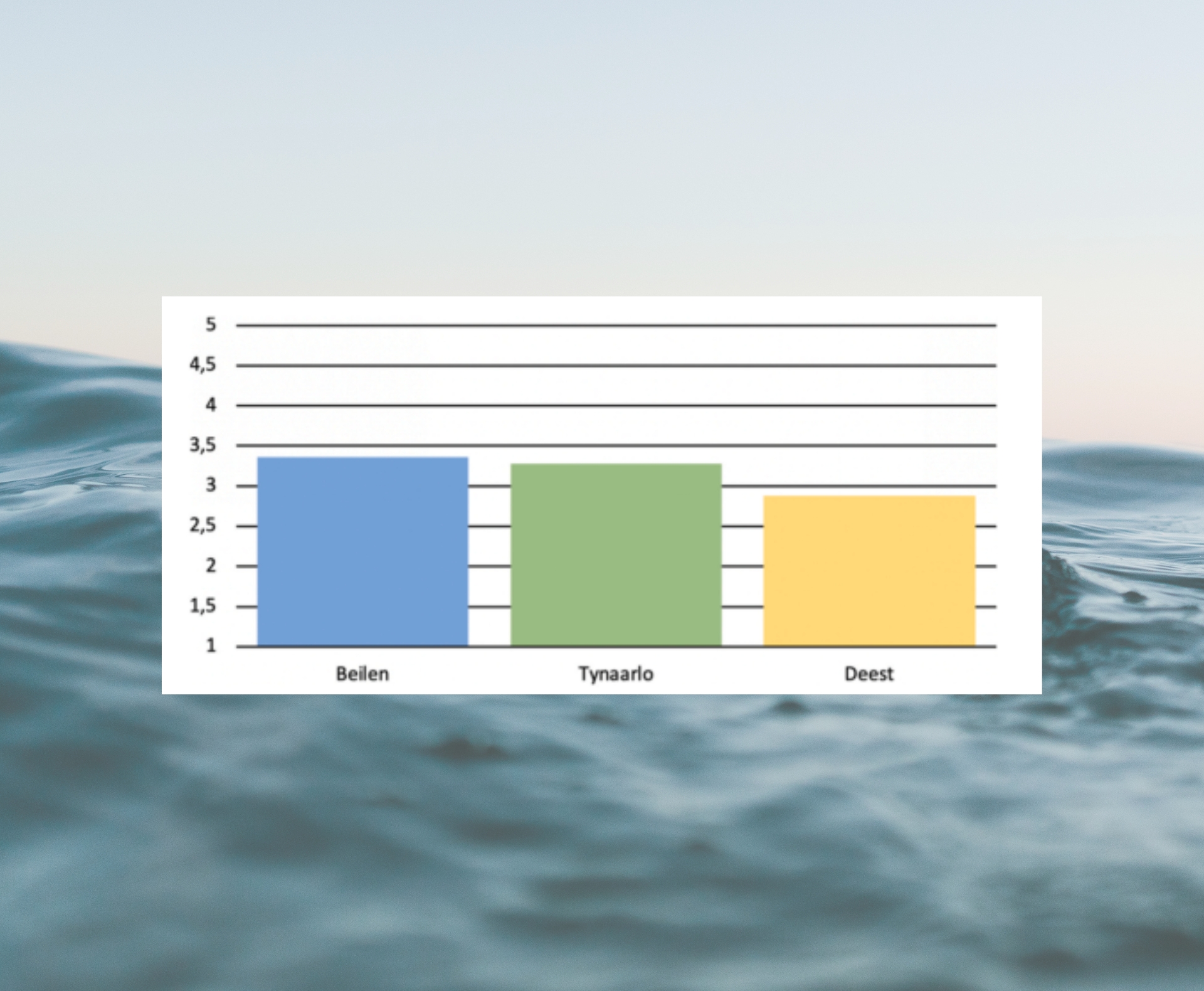
Beilen recorded the strongest public support, Tynaarlo landed in the middle, and Deest showed significantly lower support than both.
In Beilen, the project was developed with a local energy cooperative that reinvested at least half of the revenues back into the community, and the regional water authority co-owned the installation, lending it credibility. Residents reported barely noticing the park was there.
Deest tells a different story. Although the lake was formally zoned as industrial, residents experienced it as a genuine recreational space, used for fishing, swimming, and walking. Combined with limited engagement and a perceived loss of that recreational value, the project ran into significant opposition. As one local stakeholder put it, the lake "was really a recreational area, even if on paper it wasn't."
Tynaarlo landed in between: a low-visibility location resulted in a fairly neutral response, even though community involvement was more limited.
The bigger picture
The clearest takeaway is that the technology itself was rarely the source of resistance. What determined whether a project was welcomed or fought was how it was developed: whether people were engaged early, whether the process felt fair and transparent, and whether the benefits stayed local.
The study underscores the importance of early, meaningful community engagement, transparent decision-making, and tangible benefits for local stakeholders. These aren't nice-to-haves, they determine whether a project becomes a shared community asset or a lightning rod for opposition.
As floating solar scales up across the Netherlands and beyond, these insights can help guide the development of more socially accepted FPV projects, contributing to a broader and more inclusive energy transition.
Read the full paper:
Tulp, H., & Dieperink, C. (2026). Turning rejection into reflection: Exploring factors influencing community acceptance of floating solar photovoltaic systems in the Netherlands. Energy Policy, 218, 115481. https://doi.org/10.1016/j.enpol.2026.115481